Search

Wednesday, November 11, 2015

Closing Costs: A Breakdown

Many wonder what all goes on the table at to complete a transaction. Here is a breakdown of potential closing costs. It is always important to consider these possible amounts when pricing, selling or purchasing a home. 

*Other important amounts for sellers to consider are excise taxes, septic service (if applicable), buyer closing costs (if requested/agreed upon) and repairs.

And as always, consult your Realtor with any questions- it's what we are here for! :) 


Thursday, September 17, 2015

Home For Sale: Olympia WA- Park Like Setting Close to Town and Trails


READY FOR YOU TO MOVE IN~ Beautiful home near schools, medical facilities, entertainment, shopping and hiking trails! 837 Coulter St NE, Olympia WA. $249,900
Courtesy of Kimberly Linson- Realtor and LauraLee Zuber-Realtor
John L. Scott CNT
360-736-9939

Thursday, August 13, 2015

This Historic Home: Then and Now. 811 N Pearl, Centralia WA


The neatest part of historical homes is seeing them in all their grandeur throughout time.

Mark Althauser at our John L. Scott Centralia office currently has this beautiful home on the market, for a STEAL.


The story: 


In 1907, The Palms family purchased a plot of land in the heart of the new and booming town of Centralia, Washington. By 1910, they had this home built. Theodore Palms was a lumberman with interest in the Walville Lumber Company. He passed away in 1925. (Don't fret though, there are no records indicating he passed away in the home!)


This area of Centralia has a history of noble residents and outstanding homes. 811 N Pearl Street was centered near the train station, banks, bars, and town stables. Back then it was "the center of it all". Today it still is in the downtown area, although it has become more residential. Downtown Centralia has unique restaurants, an restored historic FOX theatre, and antique shops that reflect the history of the area.

Contact Mark Althauser at John L. Scott Centralia for more information about this spectacular historic home. 360-736-9939


Thursday, July 9, 2015

5 Things That Make Your House a HOME


Home: any place of residence or refuge.

After helping sellers stage homes, buyers settle into a new purchase, and enhancing my own house, I have come up with a list of 5 things I think really change the atmosphere in a residence. 

  1. Add some plants. Research has shown that indoor plants improve the air quality, encourage happiness and stimulate cognitive function/concentration. In addition to making your home look great and alive, plants help create a relaxing atmosphere.  

  2. Don't be afraid of color. White walls are impersonal and sometimes unwelcoming. Warm neutrals with color in pillows or accent decor are a great option if you are selling your home, while bright bold colors are a fun move if you are looking to make your home a bit happier. Renting? Not a problem! You can use temporary wall paper, wall decals with a pop of color, washi tape geometric designs or even cornstarch and fun fabric! 

  3. Get organized. Take some time to reduce clutter, get rid of unused items, and functionally store the rest. There are great articles online about minimalism and organization. This will always give your home a clean, presentable feeling while reducing the scattered feeling of "having so much to do".

  4. Don't forget the front door. You go in, you go out. Guests come and go. Make the entrance to your home welcoming, which is always nice to have after a long day. You can do this by adding an interesting coat rack, welcoming decor/signage, a fun doormat, or inspiring art. 

  5. Have a getaway. The best part of being home is being able to relax in your own space. Dedicate somewhere in the house to a quiet, creative area. Mine is actually in a nook in the corner of our master bedroom. There I have my special trinkets, favorite photos, a "creation station" (small bright red desk for painting and writing) and motivational decor. 


Contact me today with assistance in staging and selling your home! 


Tuesday, May 26, 2015

Easy Curb Appeal Ideas for Summer

I know it is "technically" a few weeks away, but I think it is safe to say that SUMMER IS HERE in the Pacific Northwest! Now is a great time to get outdoors, finish those projects you have been waiting on, and add a slice of summer to your home's curb appeal.


Main tasks to enhance curb appeal:

  • Plants and landscaping- trim up those overgrown plants, refresh the ones that made it through winter, and plant new flowers/shrubs in the yard or in planters.
  • Clean exterior- rent or borrow a power washer (if you do not own one) and scrub down the sides of your home. You will be amazed at the difference! Click here for a tutorial 
  • Decor- Add a potted plant, welcome sign, decorations or a wreath to your front door to create an inviting atmosphere.
  • Fertilize- Lay down some fertilizer at the beginning of summer to enjoy green grass all season.
  • Fix any small projects in need of attention- for example: clean your gutters, fix any broken fixtures, change lightbulbs that have been burnt out, etc.

Interesting ways to enhance curb appeal:

  • Get funky! Take recycled materials and craft them into garden decorations (don't go overboard, but do have some fun)
  • Paint your front door- a recent study showed that painting your front door a unique color will not only add curb appeal, but will make your home stand out in a beautiful way. 


  • Yard Sales- see what you can find at local yard sales to add some frugal yet tasteful decor to your porch or garden.

Enjoy the summer- get your green thumb, tool belt, and your paintbrush ready! 


*And as always, contact me for more home advice or Real Estate assistance*

Tuesday, May 12, 2015

Homes are Like Hotcakes in Western Washington

"What's available and that looks at least 'pretty good' is selling," according to MLS director Dick Beeson, principal managing broker at RE/MAX Professionals in Tacoma. Commenting on the latest MLS statistics, he said, "What we have in the Greater Puget Sound real estate market is too many buyers chasing too few homes." 


Right now, the market is full of anxious buyers and a low inventory. It has been this way now for a few solid months- specifically in Western Washington. 


What is the cause?


Loans are at an all time low in terms of interest rate, and buyers are able to qualify for a mortgage even if they don't have the classic 20% down funds. There are many programs such as USDA, VA and FHA mortgages that allow 0% or no more than 3.5% down on a home. 

While this is happening, sellers are still hesitant- which has created "slim pickings". However, these buyers are eager and excited to pursue homeownership and take advantage of low interest rates, so what ever is decent is selling.


What does this mean?


As summer picks up, and even more buyers are going to pursue their dream (summer is the biggest moving season), inventory may still drop and homes are still going to go like hot cakes. Property values are projected to continue rising and interest rates for home loans are expected to stay low. 

If you have been thinking of selling your home, right now is a great time. The market is on the seller side, and your home will be able to sell at a great price! It may be intimidating to enter the competitive buyer's market after doing so, but the upside to that situation is that you may be able to purchase your next home with a ridiculously low interest rate, and may even qualify for 0-3.5% down program.


My advice (sellers):


-Prep your home for the market. Complete small repairs, declutter, and touch up appeal.
-Talk to a local lender about your options after your home sells
-Contact a realtor for a comparative market analysis (these are usually free) to get an idea of a listing price
-List your home, and start packing, because it will probably sell fast!

*We just sold our farmhouse a few weeks ago. It was listed on a Friday, shown on a Saturday, and had a signed around offer on Monday evening. Take it from me as a Realtor and homeowner- it is a smart move to sell during this strange market condition!


Contact me for more information, or to help you list and sell your home:

Kimberly Linson, Realtor/Broker
John L. Scott Centralia
253-343-3385
kimberlylinson@johnlscott.com
www.facebook.com/kimberlylinsonJLS 
www.kimberlylinson.johnlscott.com 
*proudly serving Thurston, Pierce and Lewis county, but happy to assist anyone in Western Washington. 


Quote source: NW REporter, May 2015 NWMLS*


Saturday, April 25, 2015

Washington's Best Kept Secret....

Did you know there are towns along I-5 that are rural, yet only 30 min away from the capital, and about an hour and a half from Seattle and Portland?

Did you know that in these towns, you can purchase a historic, well kept home for less than $200,000?

Check out Centralia and Chehalis- you will be amazed at the deals in the area!

CLICK HERE TO VIEW HOMES IN CHEHALIS, WA:
http://www.kimberlylinson.johnlscott.com/Homes-For-Sale/Chehalis/WA

CLICK HERE TO VIEW HOMES IN CENTRALIA, WA:
http://www.kimberlylinson.johnlscott.com/Homes-For-Sale/Centralia/WA


Do you know what happens at closing?

Not working with a Realtor to sell your home is a lot like going to court and representing yourself.... We specialize in this field and are here to make sure there are no big surprises. Here is a great article about one of the many ways a Realtor can help you: 


Potential homebuyers mostly unaware of closing costs but survey reveals Realtors are a "go-to" source for info

April 2015
Consumers - and particularly millennials and first-time homebuyers - tend to be unaware of closing costs. That knowledge gap means they may need to adjust their assumptions about how much house they can afford, according to findings in a new survey. 

It even means deals could unravel, the survey sponsors suggested. 

By a wide margin, the "ClosingCorp National Closing Costs Survey" showed most people learn about closing costs from Realtors, or by doing their own research. Researchers who analyzed the results reported millennial homebuyers (those in the 18-to-34-year-old age bracket) turn to Realtors for information on closing costs rather than lenders. In fact, they do so by a two-to-one margin.

ClosingCorp CEO Brian Benson expressed surprise at that finding, saying the study shows millennials are more dependent on Realtors than previously presumed. "We know they are more tech-savvy than their predecessors, so we believe this really highlights the complexity of a residential real estate transaction."

The ClosingCorp survey targeted 1,007 adults nationwide. Researchers reported about two-thirds of millennials who plan to buy are home were unaware of closing costs. They survey also revealed that across all adult age brackets, more than one-third of potential homeowners are "not very" or "not at all" aware of closing costs.

People need access to correct information, and it needs to be simple to understand, Benson emphasized, adding, "With the upcoming changes to the disclosure process being made by the Consumer Financial Protection Bureau this August, we as an industry should be stepping up our proactive education efforts to ensure homebuyers are fully prepared to make the most significant financial transaction of their lives."

In a statement about its survey, ClosingCorp noted the addition of costs for title insurance, lender origination fees, commissions and other settlement costs could mean a median-priced $202,600 home could end up costing more than $220,000 at closing.

"Not understanding how everything is related can be a real impediment for first-time homebuyers who want to get into the market," Benson stated.

"Much has been written about millennials because they are the largest generation so far in U.S. history, and their longstanding impact on the real estate market and economy is going to be huge," the ClosingCorp CEO remarked. "Their buying behaviors are much different than previous generations, and of particular concern to the industry is that they are waiting longer to buy their first homes. This study emphasizes the need to better educate millennials, and really all consumers in general, on the real estate closing process." 

ClosingCorp® owns and operates a leading source of intelligence for closing costs and service providers in the U.S. residential real estate industry. Last year the company introduced a tool called Seller Net Sheet which is designed to help real estate agents give sellers an estimate of how much they can expect to net at closing.

Source: NWMLS/NW REporter


http://nwreporter.nwmls.com/Issues/April-2015/page/Closing-Cost-Surprise

Monday, January 12, 2015

Great Home Additions on a Budget: Recycled Pallets


Wanting to add an accent wall to the bathroom? Or maybe you want some decorative pieces of furniture that blend well with your historic home? It is time to discover the joy of recycled pallets! These are easy to obtain: you can check with local warehouses, supply stores or craigslist/classified ads. Most of the time they are FREE.

This can also be a great way to gather the wood needed for a remodel project. As you can see, we have some pallets still in tact, and my husband broke down several into usable planks.

There are many projects and inspirations you can find online using pallets, and it is as easy as typing "projects using pallets" into your search engine.

Here are some direct links for project inspiration:
http://www.1001pallets.com/
http://thepalletproject.blogspot.ca/
http://www.remodelaholic.com/2013/03/diy-pallet-wood-wall-bathroom/

With a little bit of time invested, the possibilities are endless for home improvement while your cost is little to nothing!

We have made items such as benches, tables, accent furniture, storage chests, and decorative signs. We are currently making plans to use pallets for a bathroom revamp, a deck and possibly flooring over some outdated vinyl flooring.


Saturday, January 10, 2015

Friday, January 9, 2015

FHA, USDA: What is the difference?

Probably one of the most confusing parts about buying a home is the financial route you take. Many find themselves wondering:


Will I need a lot of money for a down payment?
If I qualify, what are my options?
What do all these loans and terms mean?


A conventional bank loan is a standard loan issued by a bank, that usually requires a down payment. However, the most common loans used buy home buyers (especially non-investors or first-timers) include the FHA and USDA programs. In fact, when my husband purchased our home a few years ago, the transaction was completed using USDA financing.

Usually, if you are able to qualify for an USDA home loan, you are also able to qualify for an FHA loan- and vice versa. Let's take a look at the details of each, to help you understand the difference and decide what may be your best route...


USDA (Rural Development Guaranteed Loan Program):


Run by the United State Department of Agriculture, this loan program's main purpose is to help buyers with a lower income achieve their dream of owning property. Although it targets consumers with low income, you still must be able to prove that you can pay a certain amount in a mortgage (monthly house payment) and have reliable credit. It does not require a down payment, and allows you to pursue a modest but stable home to own.


USDA loans are pretty strict, but I personally feel this is helpful for first-time buyers. Homes purchased with USDA financing must be resided in upon purchase (you cannot use this loan to purchase an additional/rental/income producing property), must be located in a small town or rural area, cannot have an income producing building on site (such as a barn that will be used for raising/selling livestock), must pass inspection and requires mortgage insurance for the beginning period of the loan.

For a full list of rules, click here: http://www.rurdev.usda.gov/supportdocuments/3550-1chapter05.pdf

As I mentioned, I feel that a USDA loan is for the most part hassle-free and a great option for a first-time buyer. It helps to protect you from unforseen troubles when jumping into the home ownership pool.

For more information on USDA loans, rates, and qulaifications click here:
http://www.usda.gov/wps/portal/usda/usdahome?navid=HOUSING_ASSISTA&navtype=RT&parentnav=RURAL_DEVELOPMENT


FHA (Federal Housing Administration Home Loan Program): 

Run by the United States Department of Urban Housing and Development, an FHA loan has a bit more flexibility than a USDA loan in terms of property, location and buildings on site. However, this loan requires a minimum down payment of about 3.5%. Those with credit scores between 500 and 579 must make down payments of at least 10 percent. This still is a lot more affordable than the down payment for a conventional loan, which has an average of about 20% for a down payment. 


This loan is also helpful for those with a lower income, but also can be an option for those with lower credit scores in comparison to USDA. As I mentioned, though, this route does require a down payment which can increase with a lower credit score. These are also a pretty secure route to take in purchasing a home as they require an appraisal, inspection, and mortgage insurance as well. 


For a helpful list of guidelines for properties purchased with FHA loans, click here: 

http://www.investopedia.com/articles/mortgages-real-estate/11/fha-minimum-property-standards.asp

This loan is also linked with HUD HOMES, which are forclosed/auction homes that are available at a great price, and are able to be purchased with FHA financing. In fact, those with FHA financing have priority over other types of financing during the bidding process.


For information on HUD HOMES, click here:
http://www.hudhomestore.com/Home/Index.aspx

*FHA news update, interesting article about how the government is cutting FHA loan costs:
http://www.bloomberg.com/news/2015-01-08/obama-cutting-fha-cost-boosts-first-time-buyers-builders.html


The main thing to do after gaining this knowledge is to talk to a lender in your area that others recommend. Now that you have a basis of different options, you can have the upper hand in the home buying process. I hope today's post was helpful for you, and I am always happy to answer further questions. Contact me by email: kimberlylinson@johnlscott.com


Monday, December 22, 2014

How to Keep Your Old Home Warm for the Winter


The holidays are a time to cozy up by the fire, have family over, decorate with soft glowing lights, fill the house with the smell of something roasting in the oven, and appreciate the things that surround us.

UNLESS WE NEED TO BE CAREFUL ABOUT OUR UTILITY BILL...

Do you have an older home that seems impossible to keep the heat in? Here are some easy winterizing tips we have learned to use, that have saved us tons! We are now able to enjoy our farmhouse Christmas without the underlying stress of cost.

1. Is all the heat going upstairs? Hang a blanket to stop the draft at the bottom or top of the stairs. It looks a bit silly at first, but it keeps the house warm with little effort. We use a thick flannel sheet- it does the trick and looks a little festive for the winter season.

2. Everyone suggests it, because it works: winterize those windows! Especially with older homes, heat escapes and cold parades in through single pane windows. Even upgraded windows should still be winterized. Stores like Home Depot sell window kits to accomplish this, but it can also be done with bubble wrap/tape.

3. Diminish that door draft. Many older homes have mysterious areas that bring in a draft from outside, especially under doors. Department stores carry "draft stoppers". These can also be made at home using fabric (or socks) and dry beans, or even foam pipe covers.

4. If you have a stove/fireplace, use it to its full potential! We do not yet have a wood stove, but do know that by collecting firewood throughout the year and preparing, you can save hundreds to thousands on your heating costs, while having a HOT home throughout the winter. Make sure to have a fan nearby the stove/fireplace to circulate the warm air through your home. *Always follow safe procedures when using a fireplace/stove, and do not leave unattended.

5. If you have only a thermostat, learn to "work the system". Before we discovered this trick, we would turn the heat off at night, while we were gone, and after the furnace ran for a few hours. It was cold, miserable in the morning, and actually made our heating system work harder than it does now. We are actually saving more money by keeping the thermostat set to about 65 degrees. If the furnace has to heat the home from 30 degrees to 70 degrees, it uses a lot of energy in a little amount of time. It is better to keep the temperature at a medium, and allow the furnace to "touch up" the heat. This, matched with our other techniques, keeps our home warm all day for such a little cost. I was so surprised to see that our last bill was only two digits! ($80.00 compared to $150.00)

6. Winterize your bed. If you do want to save even more, and turn the heat down at night, (we do not turn it off anymore, however, we do turn it down) make your bed an alternative rather than a punishment. Layer it with flannel sheets, a down comforter, and a cotton comforter. During the really cold evenings, add some layers of knit blankets. There are nights where we wake up in a sweat, just from how warm the blankets keep us! The great part about this is that blankets are CHEAP while producing a good outcome.


Good site for DIY Door Drafts: http://www.goodhousekeeping.com/home/crafts/door-draft-stoppers-draft-snakes-460109#slide-14

Window Winterizing Kits: http://www.homedepot.com/s/window+winterizing?NCNI-5


Tuesday, October 21, 2014

Home Supply Thrift Stores: DIY Restoration Meccas


Every homeowner knows it is a big, and sometimes improbable expense to restore an old home. However, if this is done in small steps while finding deals, it can be a fun and definitely less stressful experience.

Especially if you are looking to restore an old home to the specific time period, home supply thrift stores are a great place to find old fixtures and supplies. And at amazingly low cost, you are enabled to stock up and "splurge" during your trip.

We have had a lot of success at these stores. We have come across high quality tile, snap hardwood flooring, old light fixtures, and even old time kitchen décor. Beware: these stores will make you want to remodel your bathroom that weekend; pedestal sinks and cabinets galore!

Several major second hand home supply stores include: Habitat for Humanity, Rebuild, and many religious based organizations. The easiest way to find them in your area is to search online. They vary in name and type by every city.

If you are not close to one of these stores, always keep your eye out on websites like www.craigslist.com or local free/for sale/wanted pages on www.facebook.com . If there are home supply thrift stores a day trip away, I highly suggest driving the truck/van/trailer out and making a day of adventure from the journey.

Linson home, upstairs bedroom #3

Wednesday, October 15, 2014

5 Ways to Determine if a House will be a Home for Years to Come.


So, you have found "the house", and are ready to buy. It has shutters, fruit trees, big windows, and charm. However, there are many things to consider before taking the next (quite large) step...

As the saying goes, "Never judge a book by it's cover".


1. How is the neighborhood.... At night?

Do a drive by of the home, and explore the streets nearby to make sure activity is safe. Is there is a party house next door that is dormant during the day? Is there late night traffic in the neighborhood, on foot/bike/vehicle? Is the area quiet? Is there adequate street lighting to scare off potential predators?


2. Check those nooks and crannies.

It is important to make sure that the charm of a home does not distract you from any latent defects. A latent defect is a problem that is not clearly visible without some investigation. Although many facts will be revealed in an inspection, it is helpful to try and spot these before spending the funds to discover through the inspection. When walking through the home, look beyond the staging and room colors. Check the walls near the shower/bath. See if the doors close completely (without a gap between the door and floor). Is a portion of the wall covered by paneling, wallpaper or a large decoration? Pay attention to details to see if it is for looks or a cover-up. Find the furnace and water heater; do they look sound?


3. Make a list of changes.

Try and compose a mental or paper list of everything you would eventually want to change about the home. For example, changing the floor, or adding an eating area off the kitchen. Are there many changes you desire to make? Are the ideas for this home realistic financially and time-wise? What kind of changes are on your list- cosmetic or constructive?


4. Determine your true budget.

Although you have been approved for a home up to $190,000- Are you going to be able to sustain that mortgage payment? Consider your current AND future financial situation. Make room in your funds for emergencies, travel, family status change and savings. You want to ensure that you will be able to enjoy your home, rather that toil over a hefty monthly payment. It is exciting to qualify for a high amount, but just make certain that the payments will be doable for the entire term of your loan.


5. Carefully consider your options.

How many homes have you looked at? Re-evaluate the amount of choices on the board, and the features you are seeking. Is this the first house to excite you, or the "one"?


I believe these 5 steps are very important to take before deciding to make an offer on a home. This is a place where you possibly will be for a long time, create memories, and invest in. It never hurts to be cautious in order to make the best decision for you and your family.

Think outside the box, and inside the book.


written by Kimberly Linson, Broker at John L. Scott Centralia
Kimberly Linson on Facebook
John L. Scott Website

Monday, September 29, 2014

Old House Charm... and Mold/Mildew.


I am absolutely in love with our 1910 farmhouse windows. However, there is a lot of upkeep that needs to be done in order to maintain the safety and look of an old home. With old windows comes moisture. This leads to buildup of mold/mildew on window sills, and it can even spread to the wall if not confronted.

It took only a few hours to completely rid every window of traces of mold/mildew, and it was quite an easy process considering how clean it made the house!

What we did:

*Wear facemask AND eye goggles
*Cover nearby furniture and carpet to protect from bleach
*Open doors and windows, and turn on fans

Mix a solution of 1/2 bleach, and 1/2 water in a spray bottle. (Spray bottle allows the solution to hit hard areas, while not putting too much water on your surfaces)

Remove screens from windows (there is a lot of dirt and moisture in window tracks!)

Cover each window sill/moldy spot thoroughly in bleach solution spray. Let sit for about 20 minutes (you may just need a break from all that spraying afterwards anyway!)

Next, go through each room, following the same route as you sprayed. Using a scrub brush, use that elbow grease and a small bucket of dish soap/water to break it loose and get it off the surface. MAKE SURE YOUR MASK IS ON, MOLD CAN BE TOXIC!

After all windows are scrubbed, go through with the bleach bottle and a DRY rag/towel that you don't mind getting bleach stains on. Use the spray on tough spots, and use the rag to wipe off loosened mold.

Discard scrub brush and rag/towel and allow the areas to dry completely before closing the windows again.

**Extra clean bonus: Take your screens and hose down/bleach while the window sills are drying.

By taking the time to bleach and sanitize windows, along with assessing moisture buildup, your old home will never look "OLD" or dingy. Plus, you and your family will be safe/healthy!

We will also be looking at getting our windows resealed.


More info on condensation: http://www.diydoctor.org.uk/projects/condensation.htm

NOW Is the Time to Buy... Rates on the Rise.

Interesting article shared by the National Association of Realtors, originally written by the New York Times:

When Mortgage Rates Rise...

Mortgage rates have hovered around yearly lows for weeks. But with rate-hike forecasts looming, can buyers count on borrowing costs to stay low?
Many economists are now predicting the average 30-year fixed-rate mortgage to reach 5 percent by the middle of the next year, The New York Times reports. On Friday, Freddie Mac reported the 30-year fixed-rate mortgage averaging 4.20 percent. The hike in rates is partially due to the Federal Reserve’s plan to withdraw from buying mortgage-backed securities.

Economists note that while a 5 percent mortgage rate is low by historical standards, such an increase still has the potential of reducing buying power in a home purchase. For example: According to some estimates, a 1 percent increase in interest rates can raise a monthly mortgage payment on a typical home by more than $700 in pricier parts of the country. The increase would likely be much more modest in other, less expensive markets.
But even in the case of rate hikes up to 7 percent, the analysis found that homes remain affordable overall. From 1985 to 2000, home owners’ housing costs—including the principal and interest on a median-priced home—accounted for 22 percent of a home owners’ median household income. However, for comparison, today’s households are spending about 15 percent of their median income on a median-priced home.
Source: “When Mortgage Rates Rise,” The New York Times (Sept. 25, 2014)


View site and article here: http://realtormag.realtor.org/daily-news/2014/09/29/when-mortgage-rates-rise#sf4885163

Tuesday, September 16, 2014

Home Sweet Home

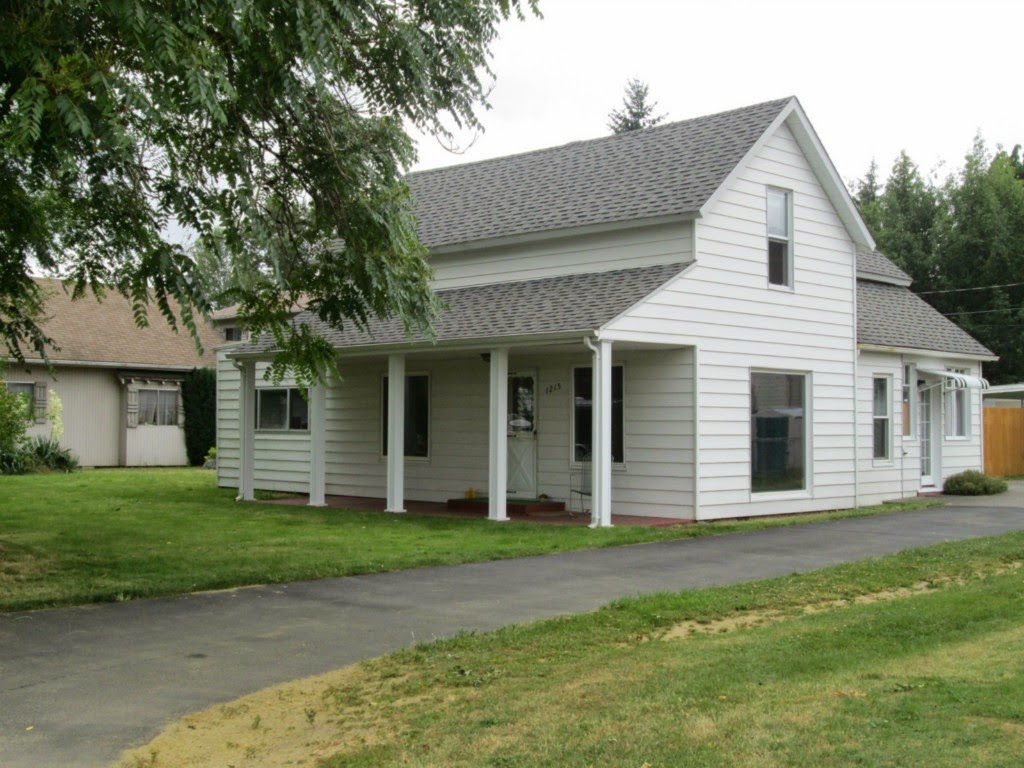
To start things off in this Real Estate blog, I thought I would talk a little bit about my home. My husband and I purchased our first home in 2011. It was a 1910 farmhouse with THE WORKS: white columns, big trees, large windows, two stories...

We had looked at one other house before we decided to put in an offer on "the one". The competition was an older house on about an acre in the woods just outside of town. It was interesting, but there was just nothing "wow" about it, especially in comparison to our 1910 wonder.

Within 30 days of making an offer, we had closed and moved in. It seemed so easy! The only bump in the road was the electric box/breaker. It did not pass inspection, and had to be replaced. Other than that, it was a fast and smooth process. I believe the fact that we were pre-qualified for a specific amount really impacted the ease of our search and close.

One week after we moved in, the pipes clogged up. About $400.00 later, we had it fixed and were back to square one. We love our home, and expect minor problems with a house that age (104 years old), but we definitely learned about the importance of thoroughly checking out a home before it is a done deal.

There are things I wish we had known about buying a home for the first time, but I now am able to use that experience to help others and be prepared for our next purchase.


Friday, September 5, 2014

6 Must Do-s Before Buying a Home


Today I found a very interesting article on www.bankrate.com, which I believe is useful information for first time or pro buyers.

Are you truly ready to buy? Follow these steps to ensure a smooth process:

1) Strengthen your credit score
2) Figure out how much house you can afford
3) Save for down payment and closing costs
4) Build a healthy savings account
5) Get pre-approved for a mortgage
6) Buy a home you know you will enjoy

These steps will save time, stress and hassle from the buying procedures, and make it more probable for you to obtain your dream home. For more detailed information you can read the full article here: http://www.bankrate.com/finance/mortgages/6-must-dos-before-buying-a-home-1.aspx